Tag Archives: The Inkling

The next feature article

Some keen readers may have noticed that The Inkling has not published a feature article since November last year (when Sustainability was posted). There is another feature in the pipeline, but because it is bigger and better than the first two it is much harder and more time consuming to prepare. To keep you entertained in the meantime, The Inkling has decided to explain why these feature articles were chosen and to give you some idea of what goes on when The Inkling writes these articles.

How it all started: Three big questions

By The Inkling

I’ve never been much of a fan of knowing things just for the sake of knowing them. I wanted my quest to result in something useful. I wanted my answers to all these little questions to add up to something – to some big answers to big questions. I wanted to assemble the information into some sort of guide, some sort of plan. A big picture. A vision.

I needed some structure to work within so I made a couple of assumptions and came up with three big questions.

My first big question was “What makes us happy?” – and my assumption was that people want to be happy. I don’t mean the silly-grin kind of happy. I mean a content kind of happy. Where people have what they need to lead full lives. The results of this investigation can be found in the post called “Happiness”.

My second big question was “How can we be sustainable”. This was personal, but I justified it with the assumption that people don’t really want to crash and burn – that we’d like to be able to carry on without disaster, that deep down in our hearts we’d prefer not to destroy the planet and each other. The results of this investigation can be found in the post called “Sustainability”.

Then the third question, the biggest one of all, was “How can we achieve happiness and sustainability?”. To answer this question I’m looking at many things, including political and economic systems, the policies of the political parties in this country and how economies and monetary systems “work” (or how people think and expect that they work, at least). I’m learning a lot (I have to) and it is taking a long time. So you don’t get too sick of waiting, I’ll be sharing little tidbits of information with you from time to time.


The next feature article

Some keen readers may have noticed that The Inkling has not published a feature article since November last year (when Sustainability was posted). There is another feature in the pipeline, but because it is bigger and better than the first two it is much harder and more time consuming to prepare. To keep you entertained in the meantime The Inkling has decided to explain why these feature articles were chosen and to give you some idea of what goes on when The Inkling writes these articles.

How it all started: Election Day 2011

By The Inkling

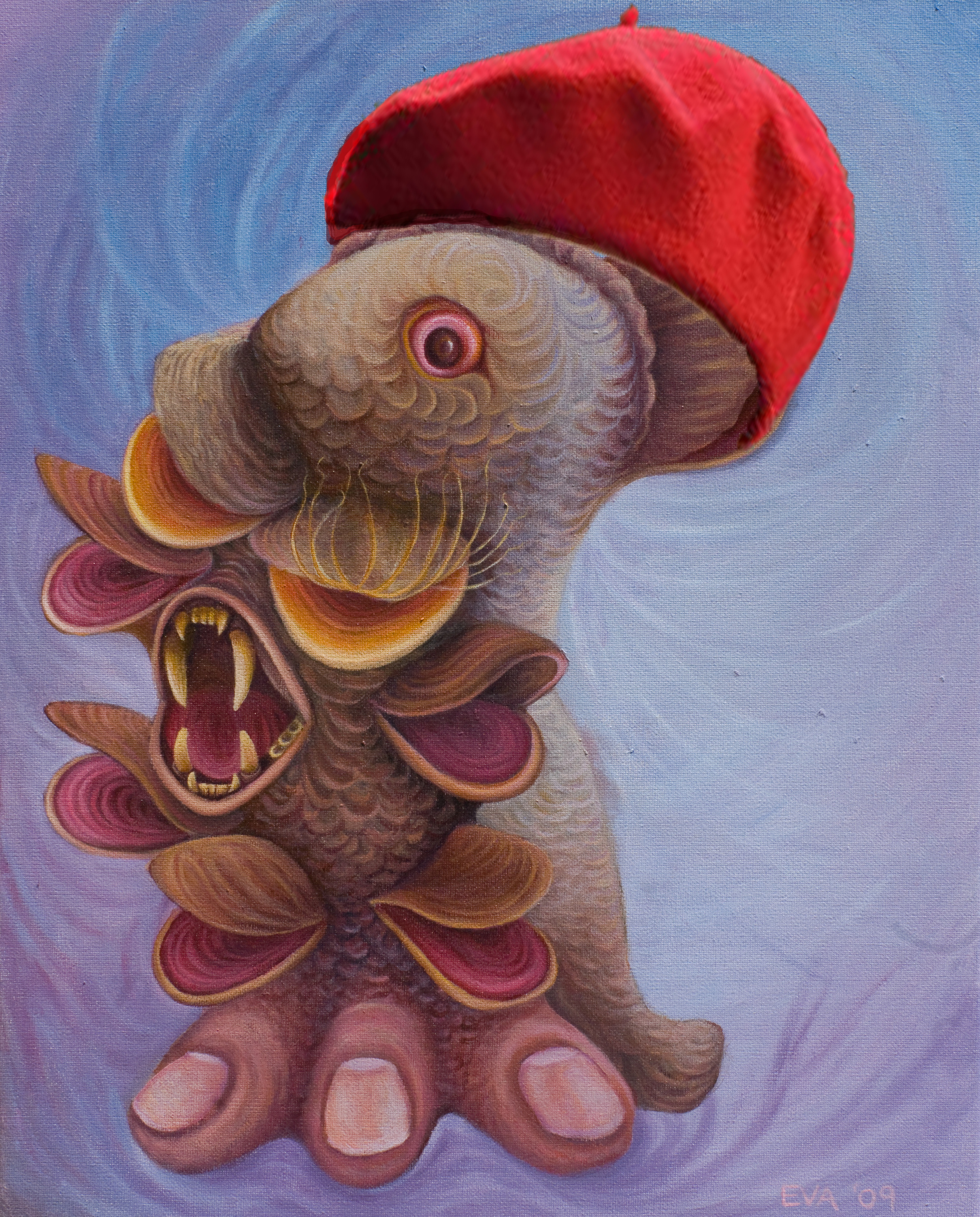
I was wearing a red hat and strayed too close to a polling booth when I was called a Communist. The man said it with venom, and a few bubbles of spit came out of his mouth. I shrugged my shoulders. I didn’t really know what a Communist was. Then later it started to worry me.

I didn’t know what a Communist was! Did the man who called me a Communist know what a Communist was? Shouldn’t I know what a Communist was, especially if people seemed to think I was one? And if I wasn’t a Communist then what was I?

For days and months these sorts of questions kept popping into my head, but they became broader. What political and economic systems are there? Which one is the best? What is “best”? What should the system be achieving?

Then it became even more personal. What should I be trying to achieve? How can I achieve it?

Eventually I couldn’t bear my ignorance anymore and I decided I’d have to find answers for all these questions.


When Sparks are Ignored: Lobotomies

Humans are capable of some brilliant things, but they can also do some really stupid things. Sometimes it is the most brilliant people who do the stupidest things, and sometimes it takes a while for everyone else to realise how silly these things are. Lobotomies are one example that causes particular pain to Sparks.

A lobotomy is an operation where the connections between the prefrontal cortex (part of the frontal lobes) and rest of the brain are severed. The prefrontal cortex is where the executive functions of the brain are performed (such as reasoning and understanding, creativity, planning, attention, problem solving, inhibition, mental flexibility, and the initiation and monitoring of actions).The idea behind disconnecting the prefrontal cortex is that this leads to the uncoupling of emotions and intellect.

Lobotomies were developed in 1935 by neurologists Dr. Antonio Egas Moniz and Dr. Almeida Lima as a treatment for mental illnesses, including anxiety, depression and schizophrenia. If you were considered extremely emotional, difficult or moody you might also have been given a lobotomy. They were given to criminals, to problem family members and to patients who would otherwise have taken up hospital beds.

As you may know, when Sparks visit human brains they inhabit the frontal lobes. This is because Sparks are looking to interact with the intellect and because the frontal lobes are where all good ideas are formed. If you were to lose the function of your frontal lobes you’d be left with what is sometimes called the reptilian part of the brain. The reptilian part of the brain runs on reward and punishment. It is not capable of abstract thinking (like imagining the likely consequences of actions or understanding another person’s feelings or motives). Obviously if you lost the function of your frontal lobes you’d also lose the opportunity to be influenced by a Spark.

Many Sparks joined forces to try to stop the lobotomy craze taking off, but they weren’t successful because not all brains are receptive to Sparks and the type of people who sanctioned and performed lobotomies turned out to be the least receptive. The potential patients were far more receptive to Sparks, but they were also often powerless or overcome by other problems, and in the end there was just not enough time – most people seemed to want a solution that was convenient rather than good.

Instead, lobotomies were made even easier by Walter Freeman. The first lobotomies involved drilling holes into the skull on either side of the prefrontal cortex and injecting the connecting fibres with alcohol to destroy them. So that lobotomies could be given to more people, Walter Freeman came up with a technique that was faster, more accessible and less expensive. This involved getting to the prefrontal cortex through the eye sockets instead. His method has become known as the “ice pick lobotomy”, because he developed the technique using an ice pick and eventually used an instrument (orbitoclast) that resembled an ice pick.

The ice pick lobotomy could be done by non surgeons and didn’t require an operating room. It took around 10 minutes to perform. The patient was made unconscious using electroconvulsive shock instead of anaesthetic. The orbitoclast was pushed up through the top of one eye-socket. Then, after a light tap on the end with a hammer, the orbitoclast would break through the thin layer of bone and enter the brain. Next the fibres connecting the prefrontal cortex were then broken by twiddling the orbitoclast around a bit. The procedure was then repeated on the other side (via the other eye socket).

Sparks weren’t even able to stop Dr Moniz being given the Nobel Prize in 1949 for his lobotomy work. Things began to turn around when the USSR banned lobotomies in 1953, but it was really the invention of drugs as a replacement that meant that Lobotomies began to decline in the 1950s.

Some people were happy with their lobotomies, as some people are happy taking drugs today. But many people suffered and many died. Those of you who still have the connection between intellect and emotion may like to listen to Josef Hassid play the violin (pre-lobotomy) while reading about him and nine other notable lobotomy patients.


Valentine’s Day has very little to do with genuine love

My husband didn’t get me anything for Valentine’s Day. Do you think that means he doesn’t love me enough?

Without knowing exactly what you consider to be “enough” love, it’s difficult for me to give you an answer.  It’s also difficult to know how much weight can be given to Valentine’s Day as a measure of your husband’s love towards you.  Valentine’s Day may be completely irrelevant to your husband. If your relationship is based on respect, friendship and soulful connection, then the idea of making obligatory gestures as part of a commercialized, mass-frenzy of superficial love giving could seem insulting to your husband.  His love for you may be so solid, deep and unquestionable that he doesn’t see the need to show you any extra evidence of this. Maybe he is just not an overtly affectionate person. This doesn’t mean that he is incapable of love, or that he doesn’t love you enough, it could just mean that he is more sensitive with his feelings and he prefers to keep them well guarded.

Having said all that, I can see how his indifference towards Valentine’s Day could be interpreted as indifference towards you, or that by him not making any effort, you could be left feeling that he thinks you are not worth the effort.  These are reasonable conclusions to jump to, but not necessarily the only ones.

Has your husband been more romantic on past Valentine’s Days? It could just be that he expects you to know how he feels now, so he doesn’t see the need to go on reminding you again and again every year. Maybe he considers Valentine’s Day to be a cliché and feels that he shows you his love more frequently, in other ways.

Perhaps more important questions to be asking yourself are: Do you feel loved and appreciated by your husband in other ways?  Does he value your opinion?  Does he like to see you laugh? Do you tell each other your hopes and fears? Do you feel empathy for one another, and enjoy one another’s company?

Valentine’s Day is for people who want to make a show of their affection.  It has very little to do with genuine love.  I wouldn’t take it too seriously.  Did you get your husband anything for Valentine’s Day?

The Spark.


The Inklings: Chapter 23

Monday night had finally come around. John, Fanta, D’arby and Syafika were all going to meet at Syafika’s place. All four of them had a lot on their minds.

John’s preparation for the meeting involved writing one sentence on a piece of paper, but this wasn’t a sign of indifference. John was full of enthusiasm to do something good, and knew what he wanted to do – that’s why he only needed to write one sentence. The only thing bothering him about the meeting was that he wondered how he could discuss his idea without making two dangerous confessions.

Fanta was a lot less certain of her ideas than John. She knew that there were some big things wrong in the world, but for some reason she couldn’t identify them, and so she had no chance of knowing what could be done about them. All she had written down were some (probably minor) things that regularly made her angry. She was looking forward to hearing what everyone else had come up with though.

Fanta was also a bit distracted by a couple of things. One was a pleasant distraction – her uncle and aunt were in town and would be staying until after Christmas. The other distraction was a secret project, and Fanta was feeling guilty that she had to keep it secret from John and Syafika.

D’arby had written pages of dot points, but they weren’t a list of problems and solutions. Instead they were points he wanted to discuss as he tried to describe what he had decided might be the biggest problem in the world. D’arby was also excited that his sister had given birth to a baby boy, and that she had done so in unexpected circumstances. D’arby was going to travel to see his sister and his new nephew the next day.

Syafika had written her list based on the things she found most awful about the world and although she’d decided on solutions, she hadn’t really thought them through. She had spent a lot more time thinking about more T-shirt slogans though. She’d even come up with a special one for D’arby.

Syafika was still busy tidying her room when John and D’arby arrived. John had brought some cold pizza. Syafika was keen to know how the T-shirt give away had gone the night before but John was more interested in heating up and serving his pizza than discussing that. Syafika decided she’d ask again when Fanta had arrived and everyone had settled down.

“Will we sit around the kitchen table?” asked John, as he started looking in the drawers and cupboards for cutlery and plates.

Syafika had been hoping to have the meeting in her room, so that her parents wouldn’t hear what they were talking about, but was now trying to decide whether it would be more embarrassing for her parents to listen to them or for her friends to see her messy room. Then Rose and Fanta arrived.

“Syafika, aren’t you going to introduce your friends?” asked Rose. After Rose was introduced to John and D’arby Rose went on to tell Syafika how Festus was bringing home takeaway and they were going to have dinner in front of the TV so Syafika could have her meeting in peace. Syafika sighed with relief and went to get some napkins from the linen cupboard.

“So, did people like the T-shirts?” asked Fanta as Syafika helped John set the table.

“There was a mixed response” answered John. “Only one person was enthusiastic, but a few people took them – probably just because they were free. Most people looked confused at being offered a T-shirt or were offended by the slogan, or by me asking what size T-shirt they wore. People are complicated!”

“Well, if I see someone wearing one one day I’ll be happy.” said Syafika. “You will keep trying to give them away, won’t you? I have some more ideas for slogans. Some might be more popular than others.”

“Of course, I haven’t given up yet” said John.

As the four friends ate their pizza D’arby told everyone how his sister had given birth at the side of the road after having run away from her husband. Then Fanta told how her uncle and aunt were going to be staying with her for the next month and apologized to John that this meant she couldn’t go to his family’s Christmas lunch with him. John didn’t seem very upset about this.

Finally there were no more excuses – it was time to get out their lists.

“Can I go first?” asked Fanta. “I don’t think my ideas are very good so I better read them out before hearing any of yours or I might not want to read them out at all anymore.”

“Don’t be silly! I’m sure you have great ideas” said John. “But you go first if you want.”

Syafika couldn’t help hoping that Fanta’s ideas were bad. She didn’t want to have the worst ones. She already felt that she was the stupidest person in the room.

“Ok” said Fanta. “I couldn’t work out what the really big problems in the world are so I came up with two things that often bother me. First, I don’t like cars and secondly I don’t like smokers. I guess what I mean is that I would like to see cities and towns that were designed for people not cars (I mean pedestrians mostly, I suppose, but bicycles are probably ok too – I might even ride one if I wasn’t scared of being hit by a car) and I’d like to be able to enjoy outdoor spaces without having to passive smoke. I mean, at cafes, in parks, at the bus stop, at the train station, while walking down the street….”

“I know! We could print T-shirts with the slogan “How much does your freedom cost others?” said Syafika.

D’arby raised an eyebrow at Syafika’s suggestion, which made her feel foolish. She realized she wasn’t really concentrating on the task at hand – she was still obsessed with T-shirts. But D’arby wasn’t thinking that Syafika was a fool. He was actually impressed because he thought Syafika had very quickly compressed what Fanta had been saying into a single sentence. He didn’t know that Syafika was just using what Fanta said as an excuse to talk about T-shirt slogans.

Then everyone turned back to Fanta and she realized that they were waiting for her solutions. “I don’t know how to fix these problems though” said Fanta. “I was hoping one of you would have some ideas”.

“Can I go next?” asked John. “I think my idea goes well with Fanta’s. I think the solution to my problem might also be part of the solution to hers.”

And so John explained how he thought that the worst problem in the world was addiction, but not just to drugs. He included extreme behaviour like eating too much, or starving yourself, or accumulating too much money or too many shoes or gambling all your money away. “There are some things people become addicted to that you can’t remove from your life (like food) so I think that to avoid suffering and disasters people need to look for balance rather than seeking extremes and I think D’arby may have already found part of the solution to this.”

Suddenly Fanta and Syafika were looking at D’arby, waiting for an explanation, but before D’arby could work out what he was supposed to say John said “I need to confess something – two things” and Fanta and Syafika turned their attention back to John.

“Fanta, I only gave up drugs because D’arby gave me some pills and they fixed me. I didn’t want to give up before that and I’d never tried. I should have told you this but I thought it would have made you think less of me” said John as he looked pleadingly at Fanta.

“What’s the other thing?” asked Fanta. She didn’t really care how John gave up his addiction but was worried that the second thing was worse.

John looked at D’arby this time and said “I’ve been putting the same pills into pizzas at the restaurant.”

“I thought I told you not to do that!” said D’arby angrily, and he wished he was at home so he could check the state of his stash of special pills. D’arby had been so distracted by his thesis lately that he’d almost forgotten that John had intended setting a lab up for him at the back of the restaurant. Suddenly he had lots of questions.

“Where did you get the pills you used? You haven’t been trying to make any of your own have you?” asked D’arby.

“Nope, I just took the big jar of them that you had in the laundry. I don’t know if putting them in the cupboard behind the washing detergent was meant to be your way of hiding them, but if it was it didn’t work” said John.

D’arby wanted to ask what had happened to the people who’d eaten the special pizzas, but didn’t think it was appropriate for him to show that much interest while he was still trying to be angry. Fortunately Fanta asked for him.

“Have you been curing your customers?” asked Fanta.

“I wish I knew!” said John. “People come in and eat the pizza, pay and leave and I can’t really see any change, but I don’t know what I should be looking for. I don’t know who is an addict and who isn’t. I don’t know if the pills will work instantly if they are taken as part of a large meal. Does drinking alcohol with them stop them from working? I don’t know anything really. I just hope I’m doing some good and I’d like to be able to do more.”

Syafika had just eaten a bite of her fourth slice of pizza when she froze. “Were there any of these pills in this pizza?” she asked, with wide eyes.

“No, I wouldn’t waste them on us” said John.

“Good” said Syafika and was about to take another bite of pizza when from the corner of her eye she noticed something move in the doorway of the kitchen. Vincent was standing there. He was looking very angry. Everyone at the kitchen table turned to look at him and all of them were thinking the same thing – how long had he been standing there?

Vincent wouldn’t have needed his experience as a police detective to know that he’d interrupted a discussion about something criminal. The four very guilty looking faces around the kitchen table told him that.

John, D’arby and Fanta left immediately, leaving Syafika and Vincent alone.

“Who were those men?” asked Vincent. Syafika explained that John was Fanta’s boyfriend and D’arby was John’s flatmate. Next Vincent wanted to know what they’d been talking about. Syafika felt like a small child as she explained that they were thinking of ways to make the world a better place, but at least Vincent seemed to believe her.

“I think you should stay away from John and D’arby” said Vincent and then changed the topic. Vincent had come over as a surprise to give Syafika a CD that he’d been enjoying. He didn’t stay long. Syafika could tell that he was disappointed with her. As she closed the door behind Vincent tears welled in her eyes. Syafika turned and ran to her bedroom, where she sat on her bed looking at her list of T-shirt slogans and ways to fix the world while she cried.

Holy Sheet

I’m so sick of fitted sheets.  I hate them!  I can never fold them properly, so they are always rumpled when I go to put them on my bed and they take up too much room in my linen closet. Does everyone have this problem?  Is there a secret method to folding a fitted sheet neatly?

Rest assured. You are not alone.  Every house-proud adult has undoubtedly struggled with a fitted sheet at some point in their lives.  It’s normal, and the good news is that it needn’t be a struggle.  Here are some suggestions which may help you to overcome your loathing of fitted-sheets:

1. Pay less attention to the disorderly state of your linen closet and enjoy the rumples in your sheets when you put them on your bed.  Why do you rumples upset you?  I think they are expressive and have interesting unique patterns.  Perhaps you have too many things in your linen closet and that is what irritates you when your fitted sheets are a bit bulky.  Do you have anything in there that you don’t use anymore?  Maybe you could clean it out a bit and donate what you don’t need to a charity shop.  Most people cope alright with bulkily folded fitted sheets.  Why not just do your best and not worry about it.

2. Have a look on YouTube for some video demonstrations on how to fold a fitted sheet.  Here are some good ones to try.

http://www.youtube.com/watch?v=xRTtpI-1zOw&feature=related

http://www.youtube.com/watch?v=_Z5k9nWcuFc

http://www.youtube.com/watch?v=YHTyH2nuFAw&feature=related

3. Don’t use fitted sheets.  Why do you think that hospitals and many hotels and resorts don’t use fitted sheets on their beds? This is because professionals who need to make multiple beds and wash loads of linen know that fitted sheets are a con.  An experienced housekeeper can strip and remake a hotel bed using two flat sheets more quickly and neatly than it is possible to do using a fitted sheet and a flat sheet.  There are techniques, such as the ‘hospital corner’ technique, that use two flat sheets, which (when practiced) are quicker and give a far more professional finish to the bed.  You will also discover that it is sometimes more economical to buy single flat sheets and pillow cases than sets.

Here are some demonstrations of methods for making a bed using two flat sheets.

http://www.youtube.com/watch?v=WQZxY8EfdJc&feature=related

http://www.youtube.com/watch?v=ZbJFNrg2G_4

Have fun!!

The Spark.


New column coming soon: When Sparks are ignored

Every month or so The Spark will tell us about a different time when the good advice of a Spark was ignored.


The Inklings: Chapter 21

When Syafika got home from John and D’arby’s place on Sunday afternoon she was feeling tired but excited. She never would have imagined that she’d enjoy the company of people as unconventional as John or D’arby as much as she did. It was as if she’d spent the day in a parallel universe, one where her life wasn’t dominated by feelings of inadequacy, one where she could enjoy doing and learning things instead of having herself at the centre of her thoughts – and she didn’t have to think about herself because she knew she wasn’t being judged. Who’d have thought that Syafika would enjoy something as potentially embarrassing and dirty as scavenging and then learning to screen print? Not even the presence of Ousman and Binta at home could make Syafika angry that afternoon.

Ousman was sitting on the front steps when Syafika arrived. “What are you doing out here?” asked Syafika.

“Sulking” answered Ousman.

“Why?” asked Syafika. She was interested enough to stop and wait for an answer.

Ousman sighed and said “It’s a long story. You probably don’t have time”.

Syafika realized that Ousman was making an observation more than accusing her of not caring. If she’d been in a bad mood she still would have been offended though. Luckily for Ousman, today Syafika realized that what he had just said was true. She never did give him much time so why should he expect her to want to listen now? She was tempted to defend herself but decided it would be more productive if she just sat down and made it clear that she wanted to hear more.

“So?” said Syafika.

Ousman sighed again. He seemed to be having trouble working out what to say. Even this new, improved version of Syafika derived some amusement from this, but it was mixed with pity.

“Imagine if you’d never met your father and if you didn’t even know who he was” said Ousman eventually. “What would you do? Would you just accept it if your Mum didn’t want to tell you anything? Or would you try to find out?”

Syafika was very tempted to tell Ousman what she’d heard about his father, but for some reason she hesitated. She remembered the day she’d heard her mother and father discussing this issue in the kitchen. That was way back when Binta was still pregnant and Syafika was only 13. Festus had been talking about Binta’s anonymous donor so Syafika had asked what that meant. She could still remember the embarrassment she felt when Festus explained how a woman could go to a special kind of bank if she wanted to have a baby without a man. Rose had been so annoyed at this discussion that she’d left the room. At the time Syafika couldn’t understand why her mum was angry, but now she realized that it was probably because Festus had been making up stories as a joke.

“Well?” said Ousman. He was still waiting for Syafika to answer his question.

“I’d want to find out” answered Syafika.

“Me too!” said Ousman. “I wanted to find out, and I did, and now Mum is very angry with me”.

“How did you find out?” asked Syafika, with some strain. What she’d really wanted to say was “What did you find out!”

“I read Mum’s diaries” replied Ousman. “I think that’s the main reason she’s angry, because she doesn’t…” Ousman stopped talking and looked at Syafika as if he’d just realized who he’d been talking to and had decided that he couldn’t trust her enough to tell her any more.


The Inklings: Chapter 20

Jinabu didn’t ask Ark where he was going and Ark didn’t ask Jinabu where she wanted to go. They were just both happy to be sitting next to each other. Jinabu felt safe and was glad to not have to think about where she was going or what she was going to do. Ark was grinning because he’d found someone stranger than him. They sat in silence until they got out of the city because Jinabu didn’t feel like talking and Ark needed to concentrate on the city traffic.

It was going to be a long drive, especially in the slow old truck. That was the first thing that Ark told Jinabu when the traffic had thinned enough for him to be able to talk. Jinabu said she didn’t mind, but that she would need lots of toilet breaks. What she didn’t tell Ark was that she already needed a toilet break and that she was getting a headache because she was so hungry, or that she didn’t have any money to buy food. When Ark noticed Jinabu’s change in mood he began to feel less happy. He thought she must have been bored with him already.

So they both sat in silence, staring ahead with grey faces, until Jinabu’s stomach began to growl. It was so loud and persistent that Ark couldn’t help himself, and he had to laugh.

“You wouldn’t be hungry, would you?” he managed to ask between chuckles. Jinabu didn’t answer, she just looked daggers at Ark. She always became grumpy when she was hungry. Ark parked outside the first place that looked like it might sell food and have a toilet and Jinabu sighed with relief. While Jinabu went to the toilet, Ark bought some food. Jinabu then went back to the truck to wait for Ark because she was feeling too weak to explain that she didn’t have any money to contribute to the food.

Ark had a few minutes of panic in the shop because he wanted to buy exactly what Jinabu needed, but didn’t know what that was. He couldn’t buy lots of things either, because he didn’t have a lot of money and they still had a long way to go. For some reason he thought that pregnant women liked icecream and so he bought a small container of that. Then he saw some fruit juice with added folate, which he’d heard that pregnant women needed. Finally he bought a fruitcake, because he liked them.

Jinabu’s eyes lit up when she saw what Ark had bought and her headache disappeared after a bit of orange juice. The next bit of the trip was much more fun. Jinabu did all the talking and she fed Ark fruitcake and ice cream as he drove. Ark ate more than he had room for because he didn’t want to upset Jinabu by telling her to stop feeding him.

As the day progressed, Jinabu and Ark got closer to Arks place, but it was a long way in a slow truck and in the afternoon they still had three hours of driving left. Jinabu had begun to feel really uncomfortable. Ark had been generous with toilet and food stops, but something else was bothering Jinabu now. At first she thought it was the truck seat that was giving her a sore back, but she began to recognize a pattern in the pain. Jinabu felt angry with herself. She’d been told so many times by friends and relatives that the baby would probably be overdue that she’d never considered that two weeks early was also possible. Jinabu began to think about the birth centre she’d booked back in Sydney, with the candles and relaxing music. The truck wasn’t much like that. Jinabu considered telling Ark what was happening, but decided to wait until they were approaching a town, as she didn’t want to make him panic and there wasn’t anything he could really do to help (they had no phone, the truck couldn’t go any faster and there was scarcely any traffic on this stretch of road). Anyway, thought Jinabu, there’s probably hours and hours of this to go.


The best things you have to offer are the things that you create yourself.

I am running out of space to put things.  I wish my house was bigger, or that we had just one more room so that we could spread out a bit.  My husband and I have lived alone in a four bedroom house since our children moved out. Apart from our bedroom, one other bedroom is kept free for visitors, another has been converted into an extended walk-in wardrobe, and the other room is my craft and sewing room.   Our garage is so small that my husband can’t even fit the car into it anymore, and I’m sick of our pokey little kitchen with not enough cupboard or bench space.  We don’t even have a proper dining room because that is where my husband does his IT work, and the dining table is always full of bits and pieces of computer parts.

Every time I go shopping now, I have to be creative about finding new places to store my purchases, and I sometimes even have to buy new things when I need them, just because I can’t find the ones I already have.

My husband won’t listen to me when I tell him that we need to add another room to our house.  He just grumbles and tells me that I have too many things!  My children threaten to “help” me to clean up whenever they come to visit, but they have no idea.  They are always trying to throw away or use my good things that I have been keeping safe for years. They have no respect for my possessions and I feel very threatened when they come to visit because they move things, and often things go missing.  I am even afraid to go away to visit my daughter who lives interstate because I worry about what my family will do with my things when I’m not there.

If I had just one more room, I could put all my valuables into it and lock the door. At least then I would be able to leave the house without fear of my best things being thrown away, taken or broken.  What can I do to convince my husband to understand how difficult he is making my life for me?

How many of these “things” are actually being used or are ever likely to be used?  It sounds to me that you do a lot of “storing” or “hoarding”, and that a large percentage of your possessions are kept away in safe hiding places.  Is there any specific reason for you to be doing this? Like, for example, are you stocking up on provisions in preparation for the apocalypse, or do you intend to donate these goods to disadvantaged families, or open a second-hand shop to sell your wares?  If not, then why on Earth would you burden yourself and your husband with so much stuff? It sounds as if your possessions have taken over your house and you and your husband are forced to live around them, caring for them, and in your case, protecting them from thieves and looters.  Is this what you intended?  Do you miss your children?  Do you feel that you need things to look after and fuss over? Would you feel unsafe without the security of a bounty of potentially essential items that will “come in handy” one day?  Would you feel unprepared to face life without a full stock of everything you might possibly ever need?

There are all sorts of organizational tips for uncluttering and stream-lining your living areas.  There are even special “coaches” who assist people to lose material weight from their homes, in the same way as you humans have personal trainers to lose weight from your bodies.  These solutions may work to immediately shed a few hundred kilos of clutter, but unless you can fully understand your needs/motives/compulsions to accumulate so many things in the first place, you are just likely to go and take great delight in filling all that new space in your home with more “things”.

I suggest you take some time to really think about what non-material, long-lasting, and fulfilling sustenance is missing from your life.  Do you love and appreciate yourself and your talents?  Do you lack a sense of satisfaction and achievement from your sewing and craft projects?  Have you invested enough effort and care into yourself and your own artistic development?  How are your relationships with your husband and children?  Do you feel connected to them emotionally?  How well do you understand and acknowledge their needs, desires and passions?  How well do they understand and acknowledge your own?

Before you reach compulsively for the most automatic and familiar forms of self acknowledgement that you know (buying and storing material goods), think about how good you would feel, if rather than adding to your external inventory, you were to add to your internal inventory. What is missing inside of you?  Create some more of that for yourself, by doing, being, and appreciating all the things you like best about yourself.  You don’t need to extend yourself through material possessions to become more of a worthy human being.  The best things you have to offer are the things that you create for yourself.

The Spark.